Category: World

  • DRC Bans Copper and Cobalt Concentrates to Drive Local Processing

    DRC Bans Copper and Cobalt Concentrates to Drive Local Processing

    The Democratic Republic of Congo has enacted an immediate ban on copper and cobalt concentrate exports, renewing its push to capture domestic value from its massive mineral wealth.

    Signed by Mines Minister Louis Kabamba Watum alongside foreign trade and economy ministers, the joint decree prohibits unrefined mineral concentrates from leaving the country while establishing a new tax regime on mining by-products.

    The move by Africa’s top copper producer and the world’s leading cobalt supplier highlights a growing push across mineral-rich nations to move beyond exporting raw commodities.

    What Is the DRC Export Ban?

    The decree targets semi-processed intermediate materials rather than fully refined metal shipments. It prohibits raw copper and cobalt concentrates, which are crushed, crushed-ore slurries that require further smelting to produce high-grade industrial metals.

    Key provisions of the ministerial order include:

    • Immediate Prohibition: A complete halt to outgoing international shipments of unbeneficiated copper and cobalt concentrates.
    • Taxation on By-Products: A new tax structure covering economically significant mining by-products, implemented with a three-month transition window.
    • Discretionary Waivers: One-year temporary export exemptions granted by the mines minister under specific strategic circumstances.

    Major multinational operators in the country include China’s CMOC, Glencore, Huayou Cobalt, Zijin Mining, and Ivanhoe Mines.

    Why Does the Export Ban Matter?

    Resource-rich economies across Africa and South America are increasingly attempting to move past basic raw-material extraction. By blocking raw concentrate shipments, Kinshasa aims to force foreign mining firms to build local processing infrastructure and smelters, creating local industrial jobs and expanding state tax revenues.

    The domestic refining landscape currently shows a sharp division in processing readiness:

    • Refined Copper Cathodes: Over 90% of Congolese copper already leaves the country as fully processed cathodes. Official data showed 696,725 tonnes of cathodes exported in the first quarter of 2026 alone.
    • Copper Concentrates: Unrefined concentrate shipments totaled just 53,926 tonnes over the same three-month period, reflecting a relatively small share of total output.
    • Cobalt Hydroxide: Most cobalt is already converted into intermediate hydroxide domestically, though some raw concentrate streams remain reliant on overseas refineries.

    Market analysts note that because the vast majority of Congolese copper is already processed locally, the immediate global supply impact remains contained. However, major joint ventures like the Kamoa-Kakula complex—operated by Ivanhoe Mines and Zijin Mining—face operational pressure to process remaining concentrate volumes through on-site or regional smelters in Kolwezi.

    What Happens Next?

    Infrastructure bottlenecks remain the main challenge to achieving complete mineral sovereignty in Central Africa. Previous concentrate bans enacted in 2013, 2019, and 2023 were repeatedly adjusted through ministerial waivers after local power grids and smelters struggled to absorb the total volume of extracted ore.

    Whether this policy succeeds depends on several critical factors:

    • Power Grid Capacity: Industrial smelters require large, continuous electrical supply that local power grids currently struggle to deliver.
    • Waiver Management: Broad issuance of strategic one-year exemptions could reduce enforcement pressure and delay local refining investments.
    • Regional Logistics: Changes in processing volumes will alter transport corridors running through neighboring trade hubs in Zambia, Tanzania, and South Africa.

    If Kinshasa maintains strict enforcement and stabilizes local power supply, the mandate could accelerate domestic refining investments across the regional copper belt.
  • Russian Missile Attack on Kyiv Kills 15 and Hits Children’s Hospital

    Russian Missile Attack on Kyiv Kills 15 and Hits Children’s Hospital

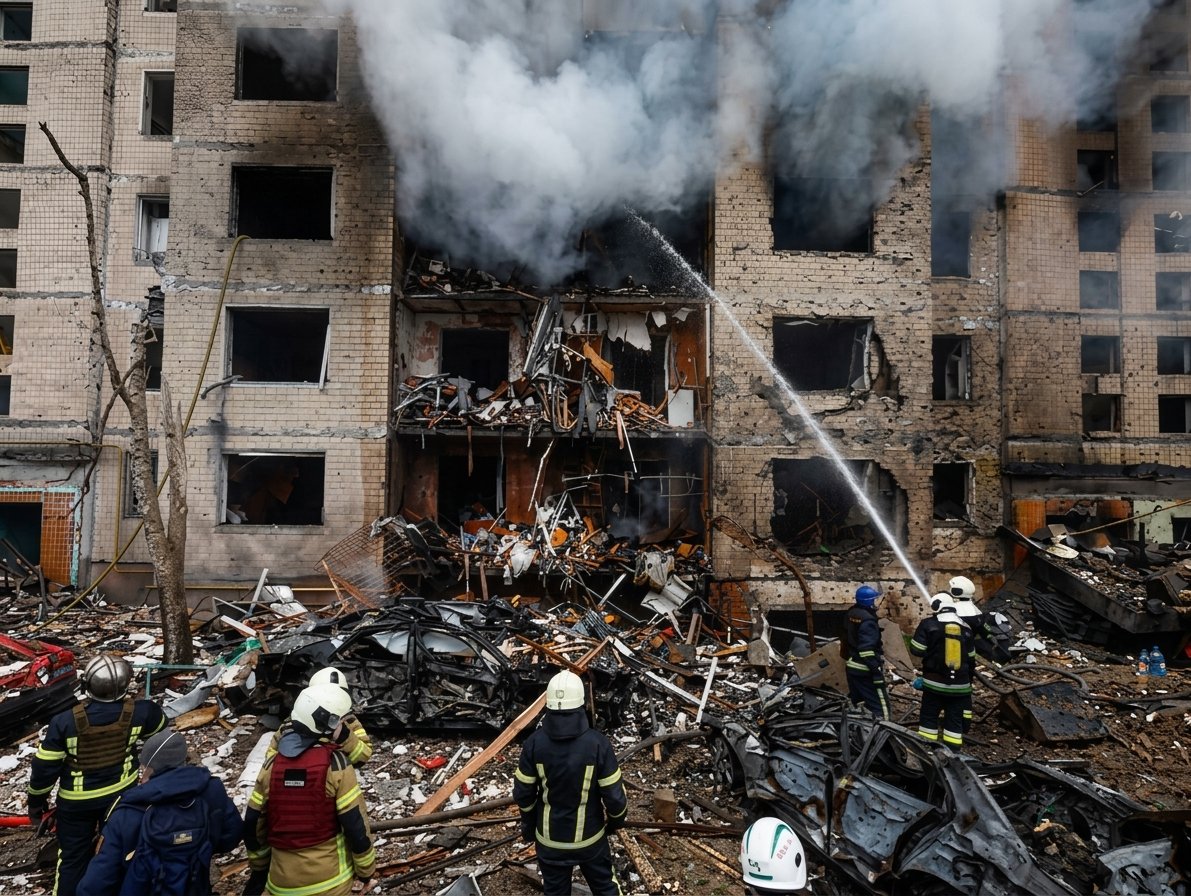
    KYIV, Ukraine — Russian forces launched a barrage of ballistic missiles, cruise weapons, and attack drones against Kyiv early Thursday, killing at least 15 people, wounding dozens, and severing power to nearly 90,000 homes in the Ukrainian capital.

    The hours-long assault, which began shortly after midnight on Aug. 20, hit 28 locations across the capital, according to municipal officials and emergency services. Debris and direct strikes damaged residential high-rises, a children’s hospital, an educational facility, and multiple commercial warehouses.

    Kyiv Mayor Vitali Klitschko confirmed the rising death toll Thursday afternoon and declared Friday, Aug. 21, a formal day of mourning across the capital. Emergency crews continued to pull survivors and bodies from collapsed structures in the Solomianskyi, Darnytskyi, and Sviatoshynskyi districts.

    “It was a massive attack,” Ukrainian President Volodymyr Zelensky said in a social media statement Thursday. “The Russians had been preparing for a long time, combining different types of ballistic missiles, cruise missiles, and drones, aiming to cause as much damage as possible.”

    The Ukrainian Air Force reported that Russia launched 44 cruise missiles, hypersonic and ballistic projectiles, and 168 Shahed attack drones. Air defense units intercepted 39 cruise missiles and 145 drones, though several ballistic missiles pierced the city’s defense umbrella.

    In the Solomianskyi district, a missile strike ripped through the top floors of a nine-story apartment building, killing seven residents on impact and igniting fires across multiple levels. Nearby, blast waves blew out windows at a children’s hospital and set parked vehicles ablaze in the facility’s courtyard.

    Electricity distributor DTEK reported that the bombardment knocked out power to 90,000 households. Utility crews managed to restore service to more than half of those affected by Thursday afternoon.

    The Russian Defense Ministry acknowledged the strikes in a statement Thursday, claiming its forces targeted drone component factories, military depots, and logistics hubs in and around Kyiv.

    The assault underscores Ukraine’s critical deficit of Western-supplied air defense interceptors, particularly systems capable of neutralizing high-velocity ballistic missiles. Kyiv has repeatedly appealed to international allies for additional Patriot units and munitions to defend major urban centers.

    Spillover from the barrage extended beyond Ukrainian borders. Military authorities in neighboring Romania and Moldova reported that stray Russian drones crossed into their airspace during the attack, with one drone crashing on Romanian soil.

  • North Korea Fires 10 Ballistic Missiles, Rejecting Trump Overture

    North Korea Fires 10 Ballistic Missiles, Rejecting Trump Overture

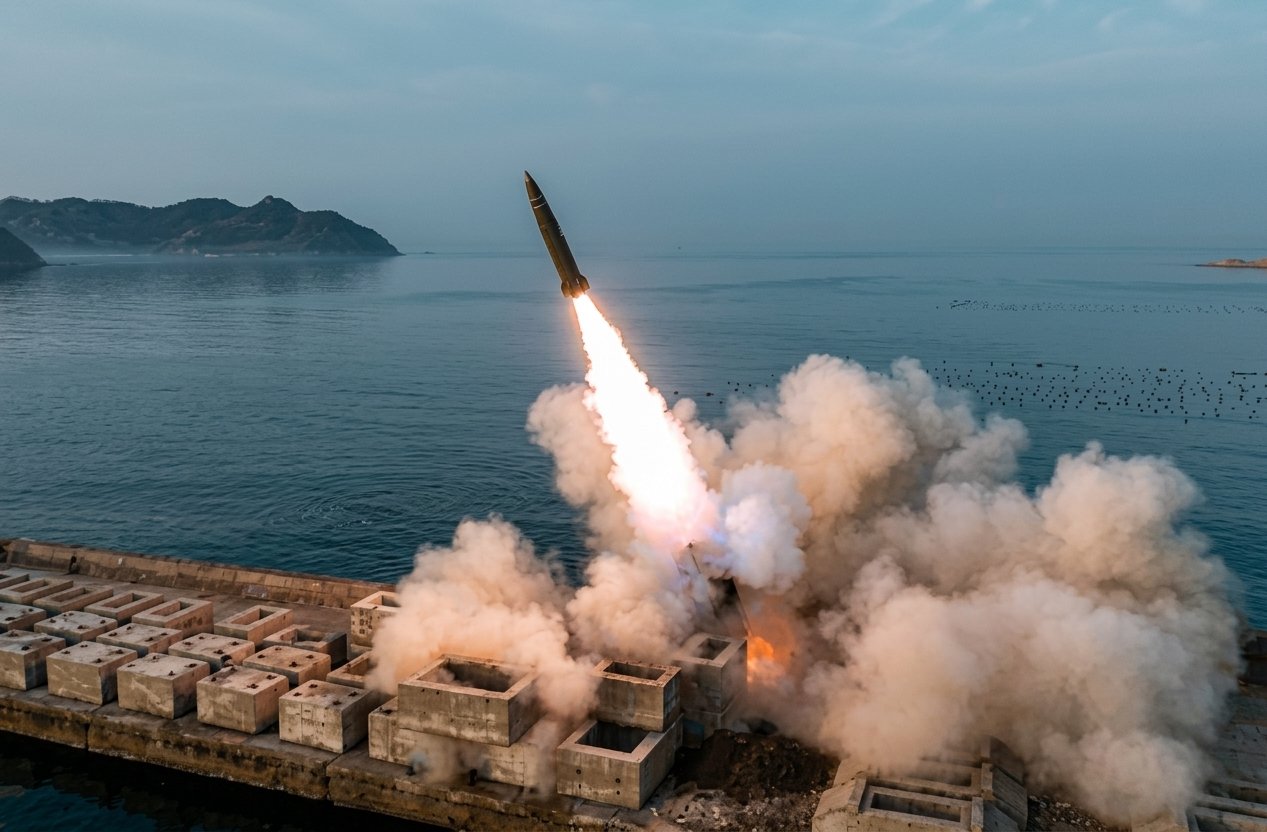
    SEOUL, South Korea — North Korea launched a salvo of roughly 10 short-range ballistic missiles off its east coast Thursday, South Korea’s military reported, directly dismissing a diplomatic overture from the White House just hours after the U.S. ordered joint regional military exercises to be curtailed.

    South Korea’s Joint Chiefs of Staff detected the simultaneous launches originating from the capital region near Pyongyang around 5:00 p.m. local time. The projectiles traveled eastward before coming down outside Japan’s exclusive economic zone.

    The sudden show of force arrived a day after U.S. President Donald Trump instructed the Pentagon to “substantially reduce” the ongoing annual Ulchi Freedom Shield exercises conducted alongside South Korean forces. Trump cited his personal relationship with North Korean leader Kim Jong Un and expressed frustration over South Korea’s reluctance to offer military support for U.S. operations involving Iran.

    The 11-day military exercise, originally scheduled through Aug. 27, was abruptly compressed to five days, wrapping up Friday.

    Pyongyang’s reaction to the reduction was swift and dismissive. Kim Yo Jong, the sister of the North Korean leader and a senior official in the ruling Workers’ Party, issued a public statement Wednesday calling the U.S. decision unworthy of comment.

    “The provocative, aggressive nature of the drills won’t change even though their duration and size were reduced,” Kim said, warning that Washington would not receive a favorable response by framing the schedule cut as a gesture of good faith.

    South Korea’s Presidential National Security Council convened an emergency session Thursday following the launches, issuing a statement urging Pyongyang to immediately halt ballistic missile testing, which violates long-standing United Nations Security Council resolutions.

    The episode marks North Korea’s 12th missile testing event of 2026 and highlights the deep friction remaining on the Korean Peninsula despite Washington’s willingness to scale back defense exercises.

    South Korean defense officials confirmed they have elevated their surveillance and readiness posture while actively sharing real-time tracking data with military command centers in Washington and Tokyo.

  • Disney Sues FCC, Alleging Trump Campaign to Strip ABC Licenses

    Disney Sues FCC, Alleging Trump Campaign to Strip ABC Licenses

    The Walt Disney Company and its broadcast subsidiary ABC filed a federal lawsuit against the Federal Communications Commission on Tuesday, accusing the agency of executing a retaliatory campaign to intimidate the network over content President Donald Trump dislikes.

    The 45-page complaint, submitted in the U.S. District Court for the District of Columbia, asks a judge to block the regulator from forcing eight Disney-owned local stations into early broadcast license renewals. The network called the agency’s pressure an “existential threat” to free speech.

    The conflict stems from an April order by FCC Chair Brendan Carr, who accelerated the review of licenses for ABC stations in major markets including New York, Los Angeles, and Philadelphia. Those licenses were not scheduled for renewal until October 2028.

    According to the filing, the agency had not ordered an early renewal review in more than 50 years.

    Disney claims the regulatory intervention came in direct response to demands from the White House. The move arrived one day after Trump publicly called for ABC late-night host Jimmy Kimmel to be fired following a joke regarding the first lady.

    The agency officially cited an inquiry into Disney’s diversity, equity, and inclusion policies, alongside compliance with public-interest standards. But Disney’s legal team characterized that rationale as a pretext meant to mask targeted censorship.

    “Acting through the Federal Communications Commission, the Administration has waged a retaliatory campaign against ABC for a single reason: it disapproves of what ABC broadcasts,” the network wrote in its complaint.

    The suit highlights repeated statements from Trump targeting broadcast operations. Just last month, the president urged regulatory action against ABC after the network chose not to broadcast a prime-time speech on election integrity.

    The network argued that regulatory pressure has already had a chilling effect on its operations. Disney noted that daytime political talk show “The View” stopped inviting political candidates to appear in February after the regulator signaled potential equal-time enforcement actions.

    “Disney is entirely justified in asking a court to stop the FCC’s attempt to coerce its broadcast stations’ programming,” said Katie Fallow, deputy litigation director at the Knight First Amendment Institute at Columbia University. “The First Amendment prohibits the government from using regulatory threats to chill speech that the government doesn’t like.”

    The regulatory body pushed back against the court action.

    “Disney is obviously very concerned about the FCC’s proceeding, as evidenced by their ongoing campaign of disinformation,” an FCC spokesperson said Tuesday. “The FCC will continue to follow the facts and law wherever they lead.”

    Disney has requested an immediate temporary restraining order to stop the license review before formal administrative hearings begin.

  • Trump Threatens to Bomb Oman Over Iran Strait of Hormuz Talks

    Trump Threatens to Bomb Oman Over Iran Strait of Hormuz Talks

    President Donald Trump warned Monday that the U.S. will bomb Oman if the Gulf nation interferes with Washington’s efforts to reach an agreement with Iran over the Strait of Hormuz.

    “If Oman gets in the way, we’ll bomb the shit out of them,” Trump told Fox News in a phone interview.

    The threat came as a 60-day memorandum of understanding signed between the U.S. and Iran in June expired Monday without a permanent peace deal. The expiration leaves the status of the critical oil shipping route unresolved nearly six months into the military conflict.

    Tensions spiked Monday morning after Iranian Foreign Ministry spokesperson Esmail Baghaei said Tehran and Muscat had reached an “understanding” on a revised transit route through the strait. Baghaei told reporters that the agreement remains separate from broader discussions on fully reopening the waterway, which Iran insists is contingent on the U.S. lifting its naval blockade and paying war reparations.

    Later in the day, Trump dismissed the Iranian-Omani talks during remarks in the Oval Office, warning Muscat against taking side deals with Tehran.

    “I don’t think [Oman] behaved very well,” Trump said. “But we’d handle them very easily, just like we do others.”

    The rhetoric marks the second time Trump has threatened military action against Oman. In May, he warned Muscat to “behave… or else we’ll have to blow them up” following reports that Oman and Iran were discussing charging transit fees on ships using the strait.

    Oman has long served as a key mediator between Washington and Tehran, facilitating diplomatic backchannels for decades. Muscat occupies the southern shore of the Strait of Hormuz, while Iran controls the northern coastline.

    Commercial shipping through the passage slowed to a virtual standstill over the weekend ahead of the ceasefire’s expiration. Tracking data from research firm Kpler showed only five cargo vessels passed through the strait Saturday, while none crossed Sunday. That marks a sharp drop from the 31 vessels registered the previous weekend.

    The White House insists Washington is in no rush to secure a deal despite rising energy prices and market volatility.

    “I have no time schedule. I’m not in a hurry,” Trump told reporters, adding that Iran should “put up the white flag of surrender.”

    Trump also confirmed Monday that U.S. officials have opened informal communications directly with Iran’s Islamic Revolutionary Guard Corps. He reiterated that any final agreement must permanently prevent Iran from acquiring a nuclear weapon.